What Will A Plant-Based Diet Do For Me?

What Will A Plant-Based Diet Do For Me?

When I was asked this question, my brain opened 78 tabs and started pouring information at my mouth faster than my internal editor could process. Fortunately, I had the good sense to say, “It is easier for me to tell you what it won’t do.”

Eating plant-based:

  • Won’t fill your arteries with gunk (cholesterol) that leads to heart disease, stroke, renal failure, gangrene, and impotence
  • Won’t cause insulin resistance that turns into type 2 diabetes, type 1.5 diabetes, and all the complications that come with that dreaded disease
  • Won’t turn on and maintain cancer cell growth
  • Won’t overfill your fat cells to the point of spilling fat into your bloodstream and putting you among the 30+ percent of Americans who are obese
  • Won’t slow down your gut to a sluggish crawl so the toxins filtered by your overworked liver get reabsorbed rather than sent out with the trash
  • Won’t make your body so acidic that your muscle tissue is used to offset it
  • Won’t load your body with heavy metals found high on the food chain
  • Won’t create inflammation and puffiness
  • Won’t keep your body so busy fighting food battles that it loses the health war

In short, eating plant-based is going to allow your body to do exactly what it is designed to do: BE HEALTHY. That means you will feel better and have more energy. Try it. Every healthy cell in your body will thank you (and the unhealthy ones will be sent out with the trash).

If you are ready to address how your food choices are negatively affecting your health, let’s set up a free get-to-know-you chat. Send me an email and let’s get you on track to taking control of your stress eating. Health@RnRJourney.com

Dr Robyn is a former competitive volleyball player turned psychologist with continuing education in nutrition. Russ is a former competitive bodybuilder and trainer on the Mr. Olympia Tour. They are the co-founders of Whole Food Muscle and the authors of How to Feed a Human The Whole Food Muscle Way. To work with them one on one to improve your health and fitness or to have them speak at your event or organization email them at Health@RnRJourney.com.
Portion Control Shouldn’t Be A Thing

Portion Control Shouldn’t Be A Thing

“Eat less.” “Control your portion size.” “Calories in. Calories out.” “Use a smaller plate.” “Eat more slowly.” “Chew each bite 100 time.” "Exercise to make up for it." "Cake on your birthday doesn't count."

The amount of “advice” I see about how to trick the human body into not gaining and holding fat makes me want to bang my head against my desk in frustration. Humans are DESIGNED to average out to eating exactly how much we need, no more, no less. But, there is a HUGE piece of the puzzle that has been removed from the game – we no longer eat the food we are designed to eat. Instead we are eating designed food that takes zero effort to obtain. That’s a problem and it rigs the game against us.

The good news is, once you understand how the human body works you don’t have to try to trick it. You can just eat until you’ve had enough. Here’s why portion control doesn’t work:

Your body can’t count calories. A calorie is the amount of energy required to raise the temperature of a gram of water one degree Celsius. Shockingly the human body has no way to figure that out. When your brain counts calories the rest of the human system laughs.

Your stretch receptors will not be denied. Your stomach feels “full” when the stretch receptors say you’ve put enough in there. It’s about volume (made up by fiber). The calorie density and how much you "think" you should eat doesn't matter to your stomach.

We are designed to eat food that needs to be chewed. One thing I’ve noticed since learning about whole-food plant-based eating is that it takes longer to eat – and that’s a GOOD thing! Plant foods have fiber that requires chewing. Chewing activates the saliva glands (the first step in healthy digestion) and gives the stretch receptors time to adjust to the food coming in. There is no reason to “wait 20 minutes and see if you’re still hungry” when you eat food that actually has to be chewed.

Cells need nutrition. Nothing else matters. There are A LOT of editable products out there that have zero nutritional value. You can eat all the junk you want and your body is going to say, “I’m still hungry.” When we talk about being plant-based people often ask, “Where do you get your protein?” That’s not even a concern, all plants have protein. The big concern if you aren’t eating plants is, “Where are you getting your nutrients?” (Hint: you're not.)

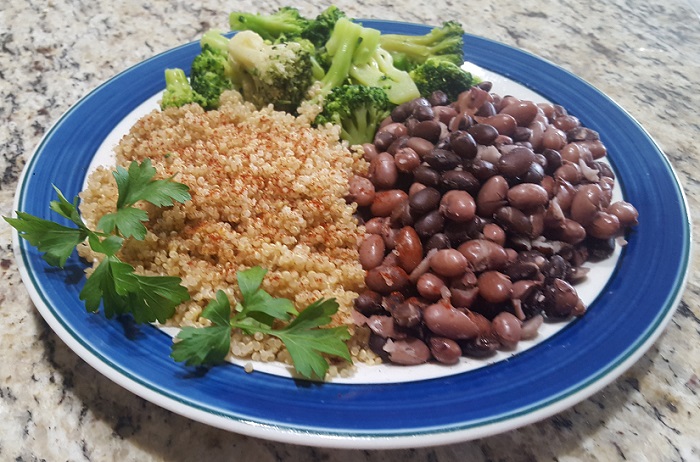
Most people “portion control” by not eating veggies and starch. It never ceases to amaze me how often people will eat an entire breast of chicken, hunk of steak or filet of fish and leave the broccoli and potato on their plate in the name of “portion control.” [Full disclosure – I used to do the same thing before I knew better.] That is exactly backwards. Eat the veggie and the starch. In fact, eat two servings. Then decide if you really NEED the fat and cholesterol in the animal product.

Most people have no idea what being hungry feels like. Hunger is mostly a thing of the past in the western world. We eat because it’s time to eat. We eat because food is available. We eat mindlessly. We eat socially. We eat emotionally. We eat junk. We eat fast. We eat unhealthily. And it’s killing us.

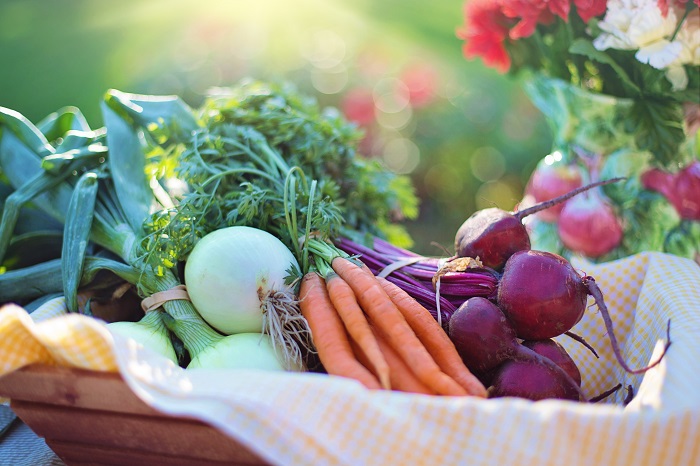
Forget portion control. Figure out what it feels like to be hungry, feed your body nutritious food it can actually use to build healthy cells and don’t give it junk food, animal fat and cholesterol it has to fight to process. Pick anything from some or all of these food groups and dig in! Legumes (i.e. beans and peas), leaves (i.e. lettuce and spinach), bulbs (i.e. onions and garlic), flowers (i.e. broccoli and cauliflower), whole grains (i.e. brown rice and oats), roots (i.e. beets and potatoes), stems (i.e. celery and asparagus), nuts/seeds (i.e. walnuts and pumpkin seeds), mushrooms and spices. Eat until you’ve had enough and then stop. Easy.

If you are ready to address how your food choices are negatively affecting your health, let’s set up a free get-to-know-you chat. Send me an email and let’s get you on track to taking control of your stress eating. Health@RnRJourney.com

Dr Robyn is a former competitive volleyball player turned psychologist with continuing education in nutrition. Russ is a former competitive bodybuilder and trainer on the Mr. Olympia Tour. They are the co-founders of Whole Food Muscle and the authors of How to Feed a Human The Whole Food Muscle Way. To work with them one on one to improve your health and fitness or to have them speak at your event or organization email them at Health@RnRJourney.com.
Artificial Sweeteners

Artificial Sweeteners

When artificial sweeteners first came out they were thought to be a panacea; all of the sweet enjoyment, none of the calorie guilt. What we (the public) weren’t told was that they were known to cause migraine in people who are susceptible. The argument was, we have to balance the “small” risk of migraines against the obesity epidemic. Artificial sweeteners were touted as the solution we needed. As you’ve likely noticed, it didn’t work out that way. In fact, obesity is worse than ever. And while studies funded by the industry haven’t found adverse side effects, 90% of independent studies do.

A few “issues” to consider:

  • Artificial sweeteners are not digested but they have been found to raise insulin. Because they aren’t digested they end up in the large intestine and negatively affect the microbiome, which raises insulin.
  • Government approval of sucralose (made from table sugar by replacing three hydrogen-oxygen groups with chlorine atoms and sold as Splenda in the US) has been correlated with a doubling of cases of irritable bowel syndrome and Crohn’s disease. While correlation isn’t causation, it is worth noting that this has held steady across all of the countries who have approved sucralose for human consumption. If you have gut issues, eliminating artificial sugar might be worth trying.
  • Aspartame (Made from the feces of genetically modified E. coli bacteria [I wish I was making this up]. Sold as NutraSweet and Equal in the US and used in many diet drinks) turns into formaldehyde in the human body. The industry (and the government) says a small amount won’t really hurt you. But overtime it has been shown to damage the neurological system and the immune system. The concern is what is a “small” amount? Is that a one-time measurement or a “small” amount every day over a lifetime?
  • Stevia (Made from the stevia leaf by isolating and concentrating the sweetness using heat and chemicals. Sold as Truvia and SweetLeaf). In high doses it causes mutagenic gene damage (a fancy way of saying it causes your cells to replicate incorrectly). If you stick with two (or less) stevia sweetened drinks a day it can be considered “harmless.” (We won’t be using it.)
  • Artificial sweeteners taste sweeter than real sugar (up to 300X), tricking the human brain into thinking it is taking in calories. When those calories don’t materialize, we are more likely to overeat later.

The use of chemicals to avoid calories doesn’t seem to be the healthiest choice. The human body can process sugar calories (honey, agave and maple syrup act the same way) but table sugar has zero nutritional value. If you need a sweetener, date sugar (made from drying whole dates) and black strap molasses (a by product of making table sugar) at least provide some nutrients with the calories.

Full disclosure: We have honey, maple syrup and table sugar in the house. I (Robyn) use honey in my tea on occasion and maple syrup in a few recipes. The table sugar is left from before we switched to eating whole-food plant-based. I see no reason to throw it out. Having a treat sweetened with something your body can actually process isn’t a huge deal as long as you know you’re taking in sugar and making the choice consciously.

If you are ready to address how your food choices are negatively affecting your health, let’s set up a free get-to-know-you chat. Send me an email and let’s get you on track to taking control of your stress eating. Health@RnRJourney.com

Dr Robyn is a former competitive volleyball player turned psychologist with continuing education in nutrition. Russ is a former competitive bodybuilder and trainer on the Mr. Olympia Tour. They are the co-founders of Whole Food Muscle and the authors of How to Feed a Human The Whole Food Muscle Way. To work with them one on one to improve your health and fitness or to have them speak at your event or organization email them at Health@RnRJourney.com.

Fighting Inflammation With Food

Fighting Inflammation With Food

Inflammation is a major problem causer in the human body. Irritable bowel syndrome, Crohn’s disease, arthritis, asthma, heart disease, autism spectrum disorder, general “puffiness” and many other common ailments are due to chronic inflammation.

We’ve mentioned before that inflammation does have a positive role to play in human health. It is how we defend ourselves against foreign invaders. When you get a splinter for example. The tenderness, redness and eventual puss (if you leave it in that long) is your body’s way of expelling the splinter. But when it becomes chronic (i.e. it can’t expel the foreign invader), it’s a problem.

There are two ways to address chronic inflammation: One – stop taking in foreign invaders (i.e. don’t get a splinter). And two – ingest substances to turn down the inflammation response (foods or drugs).

Which foreign invaders are you taking in, maybe on a daily basis? Animal proteins; specifically, dairy products and the worst of the worst – cheese. Reducing, or even better eliminating, these “splinters” will allow your body to step down from high alert and reduce the number of “troops” running around fighting foreign invaders.

You body also creates inflammation, free radicals and the like. You can reduce that by taking in antioxidants and fiber. We’ve talked extensively about the role fiber (only found in plants) plays in removing toxins and reducing gut inflammation (remember that fiber supplements don’t create the same happy-gut benefits). Today, let’s focus on whole-foods that can blunt the inflammation caused by animal-based foods and keep inflammation in check.

White button mushrooms (cooked) – a cup a day has been shown to be great. We don’t eat that much. But we do include mushrooms in many of our meals.

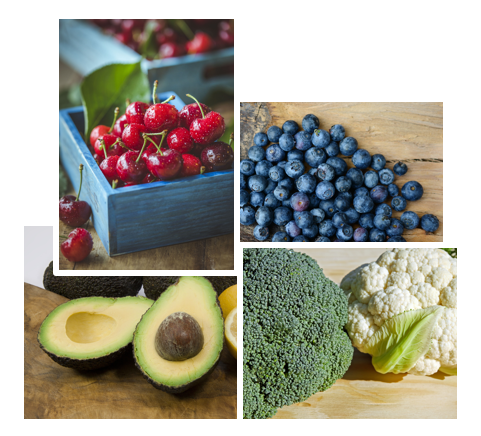
Cherries – in this case sweet cherries (like Bing) are better than tart and yellow, while having fiber and nutrients, don’t have the same effect on inflammation. Fresh is best but frozen (how we get them) is a close second.

Berries – All berries are a great option. Don’t forget that avocado is a berry. Make sure you scrape all the dark green fruit off of the skin. That is where the highest concentration of antioxidants is found.

Cruciferous veggies – Bring on the broccoli, cauliflower, kale and Brussel sprouts (and many others)!

Spices – There are several spices that have been shown to have anti-inflammatory effects. Turmeric (don’t forget to add a pinch of black pepper to increase the bio-availability), cloves, ginger and rosemary top the list.

The first thing many of our clients notice when they start moving towards being whole-food plant-based is the reduction in puffiness in their face and how quickly their gut starts to feel better. For me (Robyn) I didn’t realize how miserable I really was until I stopped being miserable. I would encourage you to give it a try. You’ll be shocked how much better you’ll feel when your body isn't chronically inflamed.

If you are ready to address how your food choices are negatively affecting your health, let’s set up a free get-to-know-you chat. Send me an email and let’s get you on track to taking control of your stress eating. Health@RnRJourney.com

Dr Robyn is a former competitive volleyball player turned psychologist with continuing education in nutrition. Russ is a former competitive bodybuilder and trainer on the Mr. Olympia Tour. They are the co-founders of Whole Food Muscle and the authors of How to Feed a Human The Whole Food Muscle Way. To work with them one on one to improve your health and fitness or to have them speak at your event or organization email them at Health@RnRJourney.com.
What’s For Lunch?!?!

What’s For Lunch?!?!

Last week we were asked about options for lunch at work. We talked about it on our Facebook live on Monday and so many people responded positively I thought it might be helpful if I shared the ideas in our newsletter.

Of course, any whole plant food can be eaten for lunch. Don't get caught up in what is "lunch food" versus what is "breakfast food" versus what is "dinner food." Eat anything you want at any time.

That said, the first step to having whole-food to eat during the week is to plan ahead (same as having any type of food to eat that you make yourself). You don’t have to know for sure what you’re going to turn it into. You can make some staples and then figure it out. Sometimes I will make a particular dish for us to eat all week (ratatouille, sweet potato lasagna, chili, soup, etc). But often I will just make quinoa or rice, beans and bake some potatoes (sweet, white or both) and then we'll each make what we feel like out of them. (Russ is plenty self sufficient to open the fridge and figure out what to eat.)

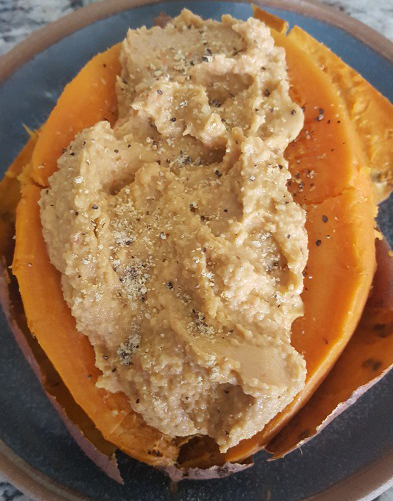
A potato with hummus is a great foundation for a lunch time meal. Add green peas, corn, beans and/or quinoa and you have a solid meal. It’s good hot or cold. One of our fans recommended banana, nut butter and cinnamon on a sweet potato. I’ve never tried it, but it sounds pretty good.

You can wrap just about anything in a tortilla. Quinoa and beans with some salsa and greens. Add hummus, avocado or taco seasoning if you want.  This also works well as a taco bowl.

Veggies or fruit with a sauce of your choice. (Maybe one of these will strike your fancy: sauce recipes.  Chocolate hummus is a decadent treat and peanut butter is always easy.

Mix potatoes with any veggies you like, add salsa, hummus or something else and you’ve got a fancy potato salad.

Salads in general are good options and this past weekend I made a tofu scramble (idea from a recipe in The Cheese Trap book) that would travel really well.

If you end up going out for lunch at a sit-down place look for sides. Just make sure you ask about butter or lard (we learned that beans and baked potatoes are often made with lard). If you ask, many places can whip up a vegan option from things they already have in the kitchen. On the rare occasion you find yourself at a fast food place, most of them do have vegan options. A quick search online is going to be your best bet as the staff is unlikely to know.

Eating without thinking is never going to be a healthy option. Hopefully this gave you some ideas to think about.

Do you have a go-to whole-food plant-based lunch option? If so, please share it with us!

If you are ready to address how your food choices are negatively affecting your health, let’s set up a free get-to-know-you chat. Send me an email and let’s get you on track to taking control of your stress eating. Health@RnRJourney.com

Dr Robyn is a former competitive volleyball player turned psychologist with continuing education in nutrition. Russ is a former competitive bodybuilder and trainer on the Mr. Olympia Tour. They are the co-founders of Whole Food Muscle and the authors of How to Feed a Human The Whole Food Muscle Way. To work with them one on one to improve your health and fitness or to have them speak at your event or organization email them at Health@RnRJourney.com.

How Toxins Hitch A Ride Out With The Trash

How Toxins Hitch A Ride Out With The Trash

You likely know that the liver is the filter in the human body. As our blood passes through the liver, toxins, waste, and anything else that doesn’t belong there (like medications) are removed. But now that your liver has collected the trash, how does it get rid of it?

Some things can be converted to urea and sent to the kidneys (via the blood) to be eliminated through urine. Others are added to the bile being sent through the gall bladder to your small intestine. Once it reaches the small intestine, bile’s primary function is to help with the absorption of fats and fat-soluble vitamins. But it also functions as the transit vehicle for toxins.

Now that these toxins are in the GI tract there is a problem. How do we keep them from just being reabsorbed into the blood, brought back to the liver and recirculating? Unfortunately, that is a risk if you are eating the Standard American Diet (or Western Diet). Whole plant fiber grabs the toxins and drags it through the intestines and out with the rest of the trash leaving the body. BUT, if there isn’t any (or very little) plant fiber, there is no train to ride out.

For most of human existence, food = fiber.  Our body says, “Hey, I need some fiber!” But what we hear is, “Hey, I’m hungry.” And (sadly) most of us eat VERY little if anything with fiber (animal products have zero fiber and processed food has next to zero fiber). That is a problem.

If you saw our Facebook live about fiber you know that in the Paleolithic era early humans ingested upwards of 100g of fiber a day. Ditto that for current era humans in places where our deadliest diseases are virtually unknown (rural China and rural Africa). In the US we average 12-18g of fiber; basically half of the minimum recommended amount of 20-35g. 97% of us are fiber deficient and we have the sickness to show for it.

If you’re wondering about the fiber content you see on processed food labels: We don’t recommend eating processed foods. But you can take the amount of carbohydrates and divide it by the amount of fiber. If the answer is 5 or less, it’s not so bad. If you find a processed food that is 5 or less, please let us know. They are pretty rare.

The fiber you buy in a container isn’t going to give you very many of the benefits of eating actual plants. Which plants you ask? The ones that are best at grabbing onto bile are (1) beets, (2) okra (don’t fry it!) and (3) kale. But really, any plants are better than no plants.

Even if you’re not ready to give up animal products, put some plants through your system. Your body will thank you.

If you are ready to address how your food choices are negatively affecting your health, let’s set up a free get-to-know-you chat. Send me an email and let’s get you on track to taking control of your stress eating. Health@RnRJourney.com

Dr Robyn is a former competitive volleyball player turned psychologist with continuing education in nutrition. Russ is a former competitive bodybuilder and trainer on the Mr. Olympia Tour. They are the co-founders of Whole Food Muscle and the authors of How to Feed a Human The Whole Food Muscle Way. To work with them one on one to improve your health and fitness or to have them speak at your event or organization email them at Health@RnRJourney.com.
But Where Will You Get Protein?!?!

But Where Will You Get Protein?!?!

It seems everyone is a resident expert when it comes the best sources for potassium (Everyone says bananas), calcium (everyone says cow’s milk) and protein (everyone says meat). Unfortunately, all of that “common knowledge” is false. I will address potassium and calcium in a different post. Today, let’s look at the facts about protein.

Fact 1: The human body cannot store protein. Fat (in the form of fat) and carbs (in the form of glycogen) can be stored for later use. But protein cannot. Excess protein is converted to fat for storage.

Fact 2: Plant proteins have been labeled “incomplete” because their amino acid profile does not match that of human flesh. If humans wanted to match their amino acid profile exactly they’d have to eat other humans (Ewww!). Plant proteins are not “incomplete” when it comes to fulfilling our dietary needs. Think of amino acids (protein) like a beaded necklace. Each color bead represents a different amino acid. The human body takes the necklace apart (regardless of the order of the beads) and puts it back together in the order it wants it.

Fact 3: The Estimated Average Requirement (EAR) for protein is 4-5% of total calories. But since the government wants to make sure they cover everyone they provide the RDA (Recommended Daily Allowance) which is 8-10% of total calories (RDA = EAR + 2 standard deviations for the stats nerds out there). Eating the Standard American Diet (SAD) will give you 15-20% protein, mostly from animal products.

Fact 4: The human body can process animal protein more efficiently(more easily) than it can plant protein and in 1914 animal-based protein was given Class A status and plants, Class B. The higher biological value (ease of processing) came to mean “high-quality.”

BUT efficient protein utilization is not advantageous for humans because it promotes undesirable growth, including faster cancer growth rates due to higher levels of IGF1.

Fact 5: In 2009 the ADA (American Dietary Association) said, “Plant sources of protein alone can provide adequate amounts of essential amino acidsif a variety of plant foods are consumed and energy needs are met.” In lay terms, don’t eat a single plant morning, noon and night and get enough calories to not waste away and you’ll be fine. Dr Esselstyn pointed out that if protein deficiency was a risk, hospitals would be full of vegans rather than obese people.

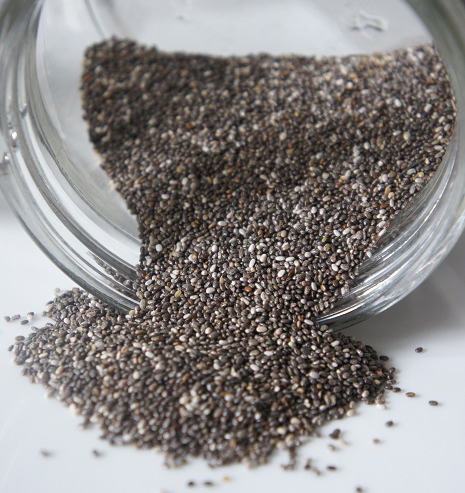
Fact 6: ALL plants have protein in them; some more than others. The top contenders: Lentils/beans/peas (did you know peas are 26% protein?), seeds (hemp/chia/flax), grains (quinoa/brown rice/oats), nuts (walnuts/almonds/cashews), spirulina (mix it in smoothies or oatmeal), and nutritional yeast (add it on anything you’d usually put cheese on). The last two were new to us when we transitioned towards the whole-food plant-based lifestyle but are now standard in our diet.

Bottom line: If you are getting enough calories from a variety of plants, you will get enough protein. The question you should be asking yourself if you’re not eating plants is, “Where are you getting your fiber?” We will cover that next week.

If you are ready to address how your food choices are negatively affecting your health, let’s set up a free get-to-know-you chat. Send me an email and let’s get you on track to taking control of your stress eating. Health@RnRJourney.com

Dr Robyn is a former competitive volleyball player turned psychologist with continuing education in nutrition. Russ is a former competitive bodybuilder and trainer on the Mr. Olympia Tour. They are the co-founders of Whole Food Muscle and the authors of How to Feed a Human The Whole Food Muscle Way. To work with them one on one to improve your health and fitness or to have them speak at your event or organization email them at Health@RnRJourney.com.

Seven “Healthy” Eating Tips That Are Just Wrong.

Seven “Healthy” Eating Tips That Are Just Wrong.

There is A LOT of common “healthy” eating advice. But who says? Why is it accepted as fact? And what is the truth?

Myth #1: Breakfast is the most important meal of the day.
Who says? Most likely started by the cereal industry.

Why do we believe it? Because it has been repeated so often it has become part of our culture.
The Truth: Break-fast is whenever you first eat after fasting overnight. With all the science on how good intermittent fasting is for humans, we can all stop forcing ourselves to eat within two hours of getting up. Instead, hydrate with water and eat real food (not sugary cereal) when you’re hungry.

Myth #2: Lunch is at noon
Who says? Old-time unions because it was halfway through the workday.

Why do we believe it? Because industry has run our lives for so long we just go with it.
The Truth: Lunch shouldn’t be a time-driven thing. It’s just the label we put on a mid-day meal. Keep your body hydrated with water and eat real food (not deep-fried processed food-like products) when you’re hungry.

Myth #3: Eating carbs makes you fat
Who says? Atkins made it popular first but anyone trying to make money on the low-carb craze.

Why do we believe it? Because there’s a lot of noise about it in the press.
The Truth: The human body burns carbs as fuel and is really inefficient at converting whole-food carbs into fat. But animal protein and fat are easy to convert into human fat. Don’t blame the potato (real food) for making you fluffy. Blame the “loaded” you put on it.

Myth #4: Skipping meals slows your metabolism
Who says? Popular knowledge

Why do we believe it? Because it sounds right
The Truth: If skipping meals slowed our metabolism humans would have never made it out of the Paleolithic era. Our bodies hum along just fine if we miss a meal or even two. That’s why intermittent fasting works and is even healthy. Don't stress about it.

Myth #5: Meat is the best source of protein
Who says? 100+ years ago science found that rats and dogs grow faster when feed animal-based protein. It was presumed that faster growth and animal protein were better for humans too.

Why do we believe it? Because it’s been repeated for 100+ years; even though science since found otherwise. Plus, the meat and dairy industries want us to believe it.
The Truth: Humans don’t need nearly the protein intake we think we do. 10% of calories is plenty. And faster growth isn’t better. Plant-based proteins can give us plenty of everything we need with nothing we don’t like cholesterol and saturated fats.

Myth #6: A calorie is a calorie
Who says? Seems like everyone

Why do we believe it? Because everyone keeps saying it.
The Truth: The human body burns or stores different fuels differently. While the measurement of how much energy a calorie creates is stable, how we use them varies. Extra animal fat and proteins are easily stored as fat in fat cells. Extra whole-food carbs are burned as heat or stored as glycogen (energy) in the blood, liver and muscles to be burned later.

Myth #7: You have to eat red meat to get iron
Who says? It’s just “common knowledge” (even doctors say it)

Why do we believe it? Because medical doctors say it
The Truth: Heme iron, found in red meat, gets into our bodies more easily than the non-heme iron found in plants (green leafy being the best source). BUT, in this case easier isn’t better. Heme iron is more difficult for the human body to regulate. The percentage of people who are anemic is about the same between those who eat red meat and those who don’t. So, eat your greens and don’t take in all the extra bad stuff that comes with red meat and your iron levels will be fine. 

Bottom line: Don’t believe all the “common knowledge” you hear about nutrition. If you fuel your body when you’re actually hungry with whole, plant-based foods and throw in some intermittent fasting you’ll reach and maintain your ideal body weight and be healthier than ever.

If you are ready to address how your food choices are negatively affecting your health, let’s set up a free get-to-know-you chat. Send me an email and let’s get you on track to taking control of your stress eating. Health@RnRJourney.com

Dr Robyn is a former competitive volleyball player turned psychologist with continuing education in nutrition. Russ is a former competitive bodybuilder and trainer on the Mr. Olympia Tour. They are the co-founders of Whole Food Muscle and the authors of How to Feed a Human The Whole Food Muscle Way. To work with them one on one to improve your health and fitness or to have them speak at your event or organization email them at Health@RnRJourney.com.
Why Carbs Are GOOD For You!

Why Carbs Are GOOD For You!

During Q&A after speaking engagements someone always incredulously asks, “You eat carbs?!?!” To which we respond, “Yes, whole-food carbs make up 80-85% of our calorie intake.” (the rest is protein and fat split about evenly). And the follow-up question is often, “Did you gain weight before you starting losing?” “No. We both started dropping weight right away.”

What is going on? How can we eat so much of a food type that most people shun as the devil in food form?

Let’s start with the fact that “carbs” is a SUPER broad term. It covers everything from sweet potatoes and grains to cakes and cookies. Obviously, those things should not be lumped together, but they often are. To be clear, when we say we eat “carbs” we mean we eat whole-food starches that contain carbohydrates.

On to the science.

The human body uses carbs as fuel and (interestingly) is really lousy at converting them to body fat. Carbohydrates are stored as glycogen in our liver and muscles to be burned; often as body heat. One study showed that up to two pounds of glycogen can be stored in our muscles! Additionally, the brain runs exclusively on glycogen. Your body CAN create brain fuel from sources other than carbs. BUT, I personally don’t want to force my body to do things the hard way when it come to my brain. Especially since carbs aren’t what’s making us fat anyway.

Another benefit of whole-food carbs is that they come packaged with fiber. If you catch any of our Facebook live videos you have likely heard us talk about fiber. It fills our stomachs so our stretch receptors feel full, slows down digestion so we feel fuller longer and has amazing nutrients that only the bacteria in our gut can release and use (gotta keep those gut bacteria happy and healthy!). Not to mention, fiber is good for keeping everything moving through the system.

We also get asked, “What kind of carbs do you eat?” The short answer, “We eat ALL the plant starches.” But most commonly, whole wheat bread (that Russ makes), whole wheat pasta (make sure the ingredients say “whole wheat”), all types of potatoes, all types of sweet potatoes, rice (preferably brown or at least tan), steel cut oatmeal, quinoa and beans in many forms (there are at least 101 different types of beans).

Animal protein, that’s a different story. It can be turned into body fat using only 3% of the calories ingested. It has zero fiber, slows down the movement in our GI tract and even starts to rot in there (we won’t mention the smell but you know what we are talking about). The potato gets the blame for making us fluffy but the issue is really the butter, cheese, sour cream and bacon we load it with; not to mention the slab of meat sitting next to it.

Seeing it written out like that kinda makes it obvious doesn’t it?

Just last week I had a client say, “I’d really like to know why I don’t feel hungrier.” To which I responded, “You aren't hungrier because you are eating starches which fuel your body correctly AND they have fiber which creates volume to make you feel full while taking time to process.”

So, go out and eat all the whole-food starches you want (Just don't smother them in animal products). They will make you feel full, make you healthy and help you reach and maintain your ideal body weight!

PS - We tried white sweet potatoes (which are oddly very deep burgundy on the outside) this week. SO YUMMY!

If you are ready to address how your food choices are negatively affecting your health, let’s set up a free get-to-know-you chat. Send me an email and let’s get you on track to taking control of your stress eating. Health@RnRJourney.com

Dr Robyn is a former competitive volleyball player turned psychologist with continuing education in nutrition. Russ is a former competitive bodybuilder and trainer on the Mr. Olympia Tour. They are the co-founders of Whole Food Muscle and the authors of How to Feed a Human The Whole Food Muscle Way. To work with them one on one to improve your health and fitness or to have them speak at your event or organization email them at Health@RnRJourney.com.

Is Juicing Good Enough?

Is Juicing Good Enough?

Juicing or taking juice supplements is seen as an easy way to get the recommended daily allowance of fruits and veggies. But is that really a shortcut way to not have to eat whole food plants? The short answer is no. But we don’t expect you to believe it just because we said so (we aren’t your parents after all). Let’s look at the reasons that juicing is not going help you as much as you think it will.

It’s easy to take in lots of calories 

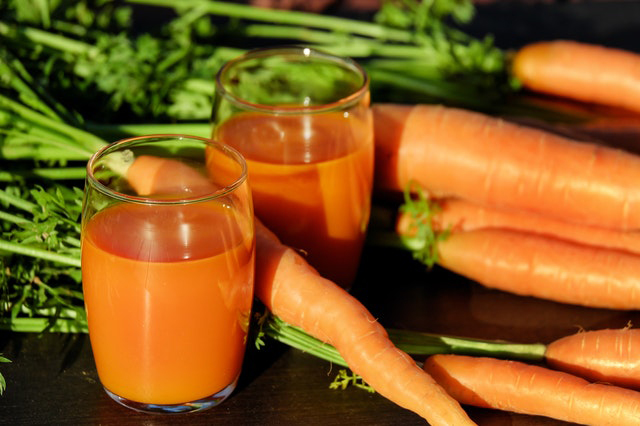
You would never eat three carrots, two stalks of celery, a handful of kale, some parsley, 2 apples, a cucumber and a bit of ginger washed down with a cup and a half of water and some lemon juice in one sitting. Not that you couldn’t. It would likely fit in your stomach. But that would BE your breakfast. Not the precursor to your breakfast. All of those plants are great things to eat. But to take in all those calories and then eat more is a mistake.

Not to mention, you aren’t getting ALL the nutrients when you juice.

Missing fiber You might think, “Who cares? I’ll just take a fiber supplement.” But a fiber supplement isn’t the same thing as the fiber in whole food. The fiber found in plants has nutrients attached to it that leaves with the fiber when the juice is stripped out. Those nutrients feed the good bacteria in your gut.Only drinking the juice means your gut bacteria goes hungry. Starve your gut bacteria and it will die. Leaving room for not healthy flora to spread. Nobody wants that.

Fiber makes us feel full. You’ve heard us talk about the stretch receptors in the human stomach and how they have a big say when your brain decides you’ve had enough to eat. No fiber means no stretch. Your brain gets the message that you haven’t taken in enough energy to sustain yourself and will very shorty be saying, “Hey, we are hungry!” And sadly, that often means grabbing an animal product or something processed just to quiet the hunger pangs.

Fiber slows down digestion. Processing plant fiber takes time. Your body has to break things down and sort good stuff from waste. Your stomach empties more slowly so you aren’t feeling hungry 20 minutes later. That processing time keeps your blood sugar from spiking. Eating whole fruit doesn’t spike your blood sugar the way just drinking juice does.

Fiber keeps things moving. We all know that fiber helps our GI tract move waste. The last thing you want is waste sitting in your gut rotting. People eating the Standard American Diet don’t get anywhere near enough fiber (and animal products are hard for our bodies to process anyway). “Fixing” the problem of not eating fruits and veggies by juicing robs you of the chance to keep your gut (and your body in general) healthy.

It used to be thought that fiber was “just a bulking agent” and anything would do; including plastic pellets. Now we know that plant fiber plays a HUGE role in our health. We think it’s sad to juice them and throw away SO much of the good stuff. Don’t pass on the opportunity to eat whole plant foods.

If you are ready to address how your food choices are negatively affecting your health, let’s set up a free get-to-know-you chat. Send me an email and let’s get you on track to taking control of your stress eating. Health@RnRJourney.com

Dr Robyn is a former competitive volleyball player turned psychologist with continuing education in nutrition. Russ is a former competitive bodybuilder and trainer on the Mr. Olympia Tour. They are the co-founders of Whole Food Muscle and the authors of How to Feed a Human The Whole Food Muscle Way. To work with them one on one to improve your health and fitness or to have them speak at your event or organization email them at Health@RnRJourney.com.