
Eating Breakfast Out

Eating Breakfast Out

Creating a reasonably healthy meal from restaurant offerings is a challenge in general. But breakfast seems to be particularly daunting. Everything is either eggs, processed meat, sugar or some combination thereof. But with a little creativity, you can pull some whole food out of the hat.

Our old standby, oatmeal is usually an option. The drawback, many restaurants use instant oatmeal. That is a less than ideal choice, but better than nothing. Verify that they make it with water, not milk and order a side of fruit to go with it. Bonus options, bring your own ground flaxseed to add. It’s easy to carry, even if you’re flying.

Check out the omelet section. That’s where you’re going to learn what type of veggies they have available. A western omelet is often a good place to start. Then, ask them to sauté all the vegetables you can list in little or no oil. If they can’t understand that, order a veggie omelet asking them to hold the egg, cheese and meat. Order with toast or no-oil hash browns and you have a great meal.

Whole wheat toast or English muffin. Make sure you order it “dry” otherwise you will likely get something soaked in butter. If you’re lucky, you might be able to get some peanut butter or avocado to go on it.

Hash browns/breakfast potatoes with no oil. Yep, that is a thing. Or if your gut can handle a little oil, don’t worry about it. Double check that they don’t make their hash browns with eggs and you’re golden (see what I did there? Hehe). Add a side of salsa, some avocado or hot sauce to pump up the flavor.

Fruit. I’m a little hesitant to suggest ordering fruit in restaurants because they seem to only ever have not-quite-ripe melon and passed-their-prime grapes. But you might get lucky and get berries. It’s always worth asking.

Beans. If you are in Europe, beans on toast is easy to find. In the US, not quite so much. But it never hurts to ask the question. You might be surprised.

In places that serve all meals all the time you can also ask about potatoes or sweet potatoes. The stars might align and they’ll have one for you.

If you are in places like New York City, Seattle, Portland, Austin or San Francisco you could very likely find an amazing tofu scramble. Let’s hope that becomes the norm everywhere in the coming years.

I’ll be in southern California for my grandmother’s 90th birthday Aug 16-19. I’m going to be bringing rolled oats and ground flaxseed with me and keep my fingers crossed that the hotel will have some kind of fruit I can add. If not, I’ll be in search of a grocery story.

I’ll update you next week on how it went and what I ate!

Dr Robyn is a former competitive volleyball player turned psychologist with continuing education in nutrition. Russ is a former competitive bodybuilder and trainer on the Mr. Olympia Tour. They are the co-founders of Whole Food Muscle and the authors of How to Feed a Human The Whole Food Muscle Way. To work with them one on one to improve your health and fitness or to have them speak at your event or organization email them at Health@RnRJourney.com.
Are Nightshades Bad?

Are Nightshades Bad?

You might have heard that NFL quarterback Tom Brady doesn’t eat nightshades. He even has a book outlining a whole host of things he doesn’t eat and why. While I would take advice on being an NFL quarterback from him, I would decidedly NOT take nutrition advice from him. Most of what he talks about is pseudoscience at best and just silly at worst. But the idea that nightshades are bad for you seems to permeate a lot of the nutrition space. Let’s take a look at what they are and separate fact from fiction.

What are Nightshades?

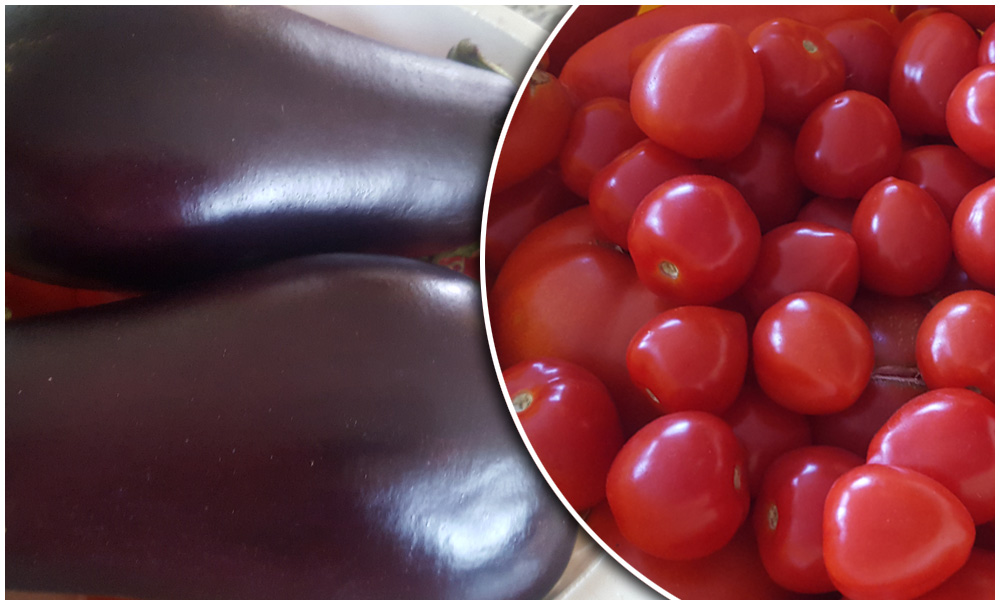
There are lots of different explanations of why nightshades are called nightshades but no clear reason why they are. Just go with it. There are about 2,000 different kinds of plants in the nightshade family. Most of them are not edible. The few that are edible have been staples in the human diet for a LONG time. Among them: peppers (including the spices made from peppers such as cayenne pepper, chili powder and paprika to name a few), potatoes (but not sweet potatoes), eggplants/aubergines and tomatoes.

Why are nightshades thought to be dangerous?

The logic here is a little bit circular but here goes.

You might have heard that tomato plants are poisonous. However, it’s entirely true. If you were to eat a pound and a half of tomato leaves, that would be a problem. But that is an exceptionally large amount and it would be hard to eat that much due to the bitter taste.

That bitter taste, caused by alkaloids (a nitrogen-containing substance), is designed to ward off insects and other critters that would otherwise eat the plant. Have you ever noticed that deer won’t eat a tomato plant but will gladly pluck the tomatoes off? That’s why. But plant is protected by the alkaloids. The fruit itself has very little alkaloids in it.

This idea that tomato plants are poisonous has been generalized to all nightshades. And thus, we end up with logic that says, “nightshades are poisonous because they are nightshades” with no more support to the tale than that.

Are nightshades good for you?

The short answer is, “Yes!” Nightshades have a vast variety of nutrients and antioxidants. Plus, they are loaded with fiber. That makes them a great source of nutrition with very few calories.

Is there anyone who shouldn’t eat nightshades?

There have been a few (less than five, none on humans) studies that suggest that people with inflammatory bowel disease (IBD) such as Crohn's disease and ulcerative colitis MAY have their symptoms aggravated by nightshades. Additionally, some people with autoimmune disease such as celiac disease, multiple sclerosis and rheumatoid arthritis have found that their symptoms are reduced when they don’t eat nightshades.

The thought in all of these cases is that the lining of the intestine is already compromised and that the small amount of alkaloids found in these food irritates it further.

How do you figure out if you shouldn’t eat nightshades?

There are some people, particularly those with arthritis, who just seem to feel better when not eating nightshades. To determine if you are someone who feels better not eating them, your best option is to do an elimination diet with A/B testing. Basically, that means you track your symptoms (A). Stop eating nightshades for a period of time to clear your system and track your symptoms (B). And then add them back one at a time while tracking your symptoms (return to A). It can be a bit tedious because you also have to be aware of any foods made with nightshades such as ketchup and pasta sauce.

If you determine you feel better not eating nightshades, it is wise to continue to track your symptoms to eliminate the placebo effect.

Bottom line
Most people are encouraged to eat nightshades for their impressive nutrition content. There are a few animal and test tube studies that suggest a small minority of people with existing health issues might benefit from avoiding some or all nightshades.

To lower the alkaloid content of nightshades, avoid eating green tomatoes, peel your potatoes (so sad since the bulk of the nutrition is in the peel), eat sweet potatoes instead and always thoroughly cook all nightshade veggies.

Get support
To discuss how Dr Robyn can help you create and track an elimination diet, please use this link to schedule a free 20-minute discovery call.

Dr Robyn is a former competitive volleyball player turned psychologist with continuing education in nutrition. Russ is a former competitive bodybuilder and trainer on the Mr. Olympia Tour. They are the co-founders of Whole Food Muscle and the authors of How to Feed a Human The Whole Food Muscle Way. To work with them one on one to improve your health and fitness or to have them speak at your event or organization email them at Health@RnRJourney.com.

Chocolate Milk After Exercise

Chocolate Milk After Exercise

Last week I noticed the guy swimming laps in the lane next to me had a bottle of chocolate milk sitting on the edge of the pool. I always have my water bottle so that he had a beverage wasn’t what struck me. It was that it was chocolate milk. I vaguely remembered a commercial about chocolate milk being a good recovery drink for athletes. I looked at the guy a little more closely. He was pretty much what you’d expect of a middle-aged man in the US, round in the middle. What the press calls a “dad-bod.” I wouldn’t have qualified him as an athlete. But good on him for swimming.

I continued my swim and then went on my way, completely forgetting about it. Then over the weekend someone posted the commercial for chocolate milk as a recovery drink in one of the healthy eating groups I’m in. Apparently, I’m being told by the universe that I need to write about this.

I KNOW that milk, chocolate or otherwise is not a health food. The casein protein in it has been linked very strongly to cancer promotion and growth. It increases inflammation in the body and most adults can’t digest it well, which leads to GI distress. So, where did this idea that it’s good for athletes come from?

Let’s take a look at how the studies were done.

WebMD references an article from 2010. The study was on eight healthy male runners. After a 45-minute run they either drank 16 ounces of fat-free chocolate milk or a carbohydrate only sports drink.

Let’s ignore the ridiculously small sample size of only men and just focus on the comparison. Basically, what they are saying is that carbohydrates PLUS protein is better for muscle recovery than just carbohydrates. That isn’t news.

The registered dietitian they quoted said that chocolate milk is “inexpensive nutritional alternative to engineered sports beverages. And, “(T)here's no reason not to reach for fat-free chocolate milk after your next workout.”

I agree that it is an alternative and perhaps a less horrible option (in the short-term at least) than an engineered beverage. But I disagree completely on her assertion that there is no reason not to drink it. There are MANY reasons to not drink milk and why take in the empty sugar calories from chocolate flavoring when you could just have some fruit?

Another2012 study looked at the same thing (chocolate milk compared to sports drinks) and concluded that chocolate milk is “optimal for exercise recovery.”

“Optimal” suggested they studied every option you could possibly ingest after exercising and chocolate milk won out. You can’t play a single game and declare a world champion – except in sloppy science.

Naturally the press and the dairy industry were more than happy to run with that story like wildfire. And to be fair, if your ONLY goal is inexpensive, immediate muscle recovery, then chocolate milk is no big deal. If your goals include long term health and longevity – it is obviously not the best option.

The human body doesn’t need anything fancy just because it was physically active. I’m not talking about extreme athletes. They are in a different class and need to be more aware of their nutritional intake (but even they don’t need chocolate milk). For most of us, and I include Russ and myself in this camp, getting great nutrition on a daily basis is going to allow our muscles to recover just fine, no pre- or post-workout drink needed.

Instead of reaching for sugary chocolate milk or sports beverage, keep yourself hydrated with water before, during and after your workout. Replenish your body’s glycogen, nutrients and minerals by eating whole food carbs which come with the perfect balance of protein. Toss on some nuts or seeds if you want a little extra protein.

If you REALLY want chocolate milk, choose a plant milk instead of dairy. I have found that soy milk has the creaminess you’d expect. But treat it like a dessert. Not a health drink. We workout five days a week with extra bike rides or swims thrown in for good measure. If you watch our daily Facebook lives you know we eat steel cut oats with fruit and seeds every day unless we are fasting (yes we workout on fasting days). Our muscles recover nicely and are ready to go to the gym again the next morning.

Dr Robyn is a former competitive volleyball player turned psychologist with continuing education in nutrition. Russ is a former competitive bodybuilder and trainer on the Mr. Olympia Tour. They are the co-founders of Whole Food Muscle and the authors of How to Feed a Human The Whole Food Muscle Way. To work with them one on one to improve your health and fitness or to have them speak at your event or organization email them at Health@RnRJourney.com.

Craving – Eating Things You Don’t Actually Want

Craving – Eating Things You Don’t Actually Want

When you think about it from an intellectual level it’s odd. Why do humans eat things they don’t actually want and then feel guilty about eating it, over and over and over? The cognitive dissonance (thinking/believing something different than what you do) is striking. Humans are the most intellectually advanced species on the planet. And yet, we can’t seem to manage something as simple as what we eat.  

There are a few factors to consider:

Evolution– We are designed to ingest the largest amount of energy in the most efficient way possible. The goal is to keep yourself alive long enough to procreate and take care of the next generation long enough so they can procreate.

To that end, you can feed a human just about anything, as long as it has enough calories and some basic nutrients, and they will live about forty years. Plenty long enough to have children and raise them to the point of having their own children with a few years to spare. 

If your goal is to live to be forty, you really don’t have to do anything special with your diet. You won’t thrive. I’ll likely be overweight, tired and suffer from inflammation, but you’ll live for 40-ish years.

Industry– The food industry is designed to make money creating ingestible substances (notice I did not call it food). Basic business sense says things should be made as cheaply as possible, sold at the highest price possible, to the largest masses possible. Ingestible substances made from the cheapest ingredients that are shelf stable (remove the nutrients so it won’t rot) and taste good. Great for the company bottom line. Bad for your waistline.

Easy calories. Just what humans need to live for about forty years.

Science– The food industry is REALLY good at studying humans, what we like, what we do and most importantly, what we will pay for. Enter the discovery of the Bliss Point. The exact mixture of salt, sugar and fat that makes the human brain say, “YES!” and turns off the ability to say “no.”

Put all those pieces together and you have the perfect storm for saying, “I shouldn’t but…” and digging in - cognitive dissonance personified. 

2.5 million years of evolution is telling you to eat as much as you can, as fast as you can before it disappears and you starve to death. The food industry has created cheap, fast calories that hit all the “eat more” taste centers in our brain and they package it in colors that our unconscious brain equates with nutrition.

But the more nutrition-less calories we ingest, the more calories we crave. Our evolution doesn’t have a mechanism to ask for nutrition, only calories. We end up on a hamster wheel of eating and eating and eating, but being malnourished and still hungry so we eat more.

At the end of the forty years our evolution can squeeze out of this mess, we are obese and sick, really sick. Heart disease, diabetes, high cholesterol, high blood pressure. And we start to die. 

But don’t worry, modern medicine can keep you alive, sort of - hopefully. Not thriving. You’ll be tired, sick and spending insane amounts of time and money trying to keep your body plugging along. Some of us will manage to make it to 80, twice as long as 40. That will be used as evidence that things aren’t so bad. Just ignore the people who are dying and that those who are alive are sick. It’s all good.

All of that is just smoke and mirrors and excuses. Sure, that WHY things are the way they are. But that doesn’t mean it has to stay that way.

What if you got off the hamster wheel? What if, you didn’t let evolution, industry and their science collude to make you sick and kill you?

You deserve better than to be controlled for the benefit of corporate shareholders. You can do it and we can help. Join the Whole Food Muscle Club. Your future is worth it.

Dr Robyn is a former competitive volleyball player turned psychologist with continuing education in nutrition. Russ is a former competitive bodybuilder and trainer on the Mr. Olympia Tour. They are the co-founders of Whole Food Muscle and the authors of How to Feed a Human The Whole Food Muscle Way. To work with them one on one to improve your health and fitness or to have them speak at your event or organization email them at Health@RnRJourney.com.
Athletes Are Going Plant Based. Can It Help You?

Athletes Are Going Plant Based. Can It Help You?

We are starting to hear a lot about pro-athletes moving towards or being plant based. Tennis champions like Venus Williams and Novak Djokovic, Formula 1 driver Lewis Hamilton, several of the NFL’s Tennessee Titans and of course, women’s soccer player Alex Morgan. These are people whose livelihood depends on their body being in peak condition and on gaining whatever edge they can over their competition. 

Is it possible they are succeeding in spite of not eating animal protein or are they gaining an edge BECAUSE they aren’t eating animal protein? There is a good bit of evidence it is because they aren’t eating animal protein and are eating lots of great nutrients in the form of plants. 

Here are just a few things to consider about eating less animal products and more plants:

  • Leaner body composition (less unnecessary body fat)
  • Good glycogen storage (better endurance)
  • Improved blood flow (more oxygen to the muscles and waste away from the muscles)
  • Reduced oxidative stress and inflammation (less tissue damage, better motivation)
  • Healthy, flexible arteries (reduced fat intake = reduced arterial stiffness)
  • Strong heart (reduced cholesterol reverses plaque buildup)
  • Reduced muscle fatigue (all of the above help muscles perform at peak levels longer)
  • Quicker recovery (do more, faster)
  • Healthy carbohydrate intake (better fuel source – it’s worth noting that a 2016 study of Ironman triathletes found that less than half were getting the recommended amount of carbs for training 1-3 hours a day) 

Okay. So maybe you’re not an athlete and your livelihood doesn’t depend on your ability to do a physical activity better than 99% of the world. But your livelihood DOES depend on your ability to go to work or run your business. If your health goes, so does your income. So let’s use what we know about eating plants and peak athletic performance and apply it to everyday life.

  • Leaner body composition = Healthy body weight? ✔
  • Good glycogen storage = Function all day without being exhausted? ✔
  • Improved blood flow = Blood flow is always a good thing ✔
  • Reduced oxidative stress and inflammation = less tissue damage ✔
  • Healthy, flexible arteries = cardiovascular health ✔
  • Strong heart = more cardio vascular health ✔
  • Reduced muscle fatigue →maybe this one doesn’t matter to you. I like it for me.✔
  • Quicker recovery = body heals itself faster, yes please ✔
  • Healthy carbohydrate intake = feed your body right and your body will take care of you ✔

I’d say that’s some pretty good data for eating plants being good for all of us, not just athletes. Here’s a few tips to get started:

  • Take note of how many times a day you are eating animal products. If you are like most, it’s likely three or more times every day.
  • Replace dairy milk with a plant milk (we like almond, oat and soy)
  • Replace meat with beans or lentils at least a few times a week
  • Eat oatmeal with fruit and seeds for breakfast
  • Join the Whole Food Muscle Club for tips, advice, recipes and support

Your health is your most valuable asset. Don’t treat it like an inconvenience

Dr Robyn is a former competitive volleyball player turned psychologist with continuing education in nutrition. Russ is a former competitive bodybuilder and trainer on the Mr. Olympia Tour. They are the co-founders of Whole Food Muscle and the authors of How to Feed a Human The Whole Food Muscle Way. To work with them one on one to improve your health and fitness or to have them speak at your event or organization email them at Health@RnRJourney.com.

The Calories-In-Calories-Out Lie

The Calories-In-Calories-Out Lie

I see it everywhere. People saying that losing weight is simply a matter of eating fewer calories than you burn. They say it doesn’t matter what you eat or when you eat, only how many calories are in it and how many calories you burn.

The Calories-In-Calories-Out Lie is complete and utter….er malarkey.

First off, a calorie is the amount of energy required to raise a gram of water one degree Celsius. If that tells you nothing about food, don’t worry, your body doesn’t understand it either. A flame in a lab is much better at incinerating food to measure calories than your body is. The higher the fiber content of food the greater the likelihood that your body can’t access all the measurable calories.

Secondly, when you eat too few calories consistently over a period of time, your body adjusts your metabolize downward. Humans are designed to survive a famine. Using portion control and calorie restriction will make your body believe there is a famine. That is why so many people struggle with their weight plateauing and then starting to creep back up, even though their calories intake and expenditure have not changed.

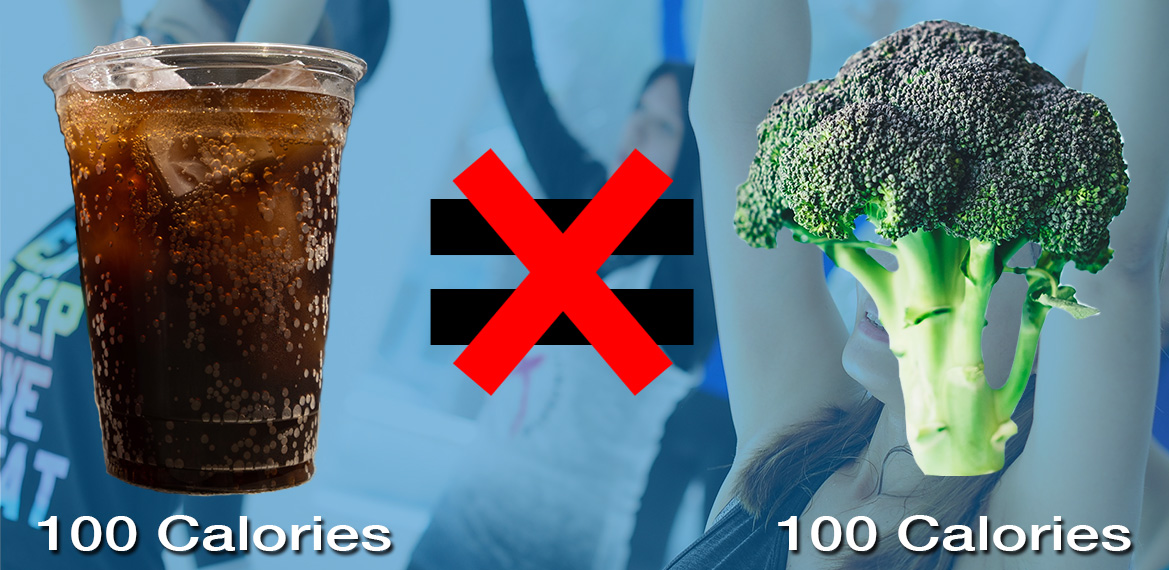
Thirdly, not all calories are created equally. Some come attached to nutrients that your body can use, others are empty and next to useless. Consider 100 calories worth of broccoli compared to 100 calories worth of soda/pop. The calorie count is exactly the same.

The broccoli is loaded with fiber (meaning some of the calories are hard to extract), requires chewing (burning calories), has to be further broken down in the digestive tract (burning calories) and has nutrients your body can use. Then the fiber grabs on to toxins to carry them out of the body with it.

The soda/pop – is swallowed down with no chewing required. The sugar is easily absorbed, spiking your blood sugar. If it’s a diet drink, your body gets confused about expecting calories but getting none and makes you eat more later. The chemicals become part of the toxic soup waiting to be picked up by exiting fiber. Unfortunately, these 100 calories didn’t come with any fiber. So the toxins might get reabsorbed and have to be filtered out of the system again.

You body cares about nutrition, not The Calories-In-Calories-Out Lie.

Instead counting calories, try this:

Eat real food, not fake food designed to make a company money. Pay attention to calorie density compared to nutrition density. You want as much nutrition per calorie as you can get. Recognize and address your emotional, Pavlovian and stress relationship with food. Eat when you're hungry and stop before you are stuffed.

If that last paragraph sounds like something you’d like to do, but you aren’t sure where to start, click this link to book a free 20-minute chat with Dr Robyn to discuss how coaching or becoming a member of the Whole Food Muscle Club can help you avoid the Calories-In-Calories-Out Lie.

Want to stay on top of all things food, fasting and fitness? Join the Whole Food Muscle Club today. Your future self will thank you.

Dr Robyn is a former competitive volleyball player turned psychologist with continuing education in nutrition. Russ is a former competitive bodybuilder and trainer on the Mr. Olympia Tour. They are the co-founders of Whole Food Muscle and the authors of How to Feed a Human The Whole Food Muscle Way. To work with them one on one to improve your health and fitness or to have them speak at your event or organization email them at Health@RnRJourney.com.

Be A Health Sleuth

Be A Health Sleuth

Our clients regularly say, “It’s SO confusing! I just don’t know what to eat anymore.” It’s true. There is A LOT of conflicting health information out there. How do you decide who to believe and what to do, short of just throwing up your hands and exclaiming, “I have to die of something so who cares what I eat?!?!” (We heard that too.)

We’ve collected a few tips to help you decide who to believe and to educate yourself against the lies and money grabbing done at the expense of your health.

Tip One –
If the person or company making the health claim is selling food, a product, or supplement, dig deeper.

Tip Two – 
If the person or company making the health claim is using scare language, narrow your eyes and tilt your head. Scare language will make you fear that you are doing huge damage to your health by not having their product.

Tip Three –
If the person or company making the health claim shares science or an expert’s opinion that a food or product has health risks and then downplays those risks by saying, “Yeah, but…” or “moderation…” or anything else that makes you feel comfortable ignoring the health risks outlined in the science, sigh and walk away.

Tip Four – 
If the person or company making the health claim backs it with science that sounds too good to be true (i.e. bacon is good for you), purse your lips and shake your head.

Tip Five – 
If the person or company making the health claim intermingles scientific data with their opinion of that data without making it clear which is which, read it very carefully and interpret the data yourself.

Tip Six – 
If the person or company making the health claim wants to argue with you and prove they are right and you are wrong rather than share information and allow you to make your own choice, stop following them on social media.

Tip Seven –
If the person or company making the health claim is subsidized by tax dollars, assume any data they provide has been paid for and is biased.

Tip Eight – 
If the person or company making the health claim is aggressively sharing “common knowledge” and trying to make you look dumb, consider them a lost soul and wish them well.

Tip Nine –
If the person or company making the health claim calls something “healthy” when they mean it is healthier than something worse (butter vs olive oil for example), don’t take health advice from them.

Tip Ten – 
If the person or company making the health claim is only sharing information, providing their source and suggesting you draw your own conclusions, they may be trustworthy. Compare what they are sharing with the information you have gathered from other sources and go live your best life!

Dr Robyn is a former competitive volleyball player turned psychologist with continuing education in nutrition. Russ is a former competitive bodybuilder and trainer on the Mr. Olympia Tour. They are the co-founders of Whole Food Muscle and the authors of How to Feed a Human The Whole Food Muscle Way. To work with them one on one to improve your health and fitness or to have them speak at your event or organization email them at Health@RnRJourney.com.

Veggies To Eat Cooked

Veggies To Eat Cooked

Vegetables are a great food. Any way you can get yourself to eat more of them, do that. We tend to eat more raw foods in the summer months, who wants to work over a hot stove if you don’t have to? In the winter we love hearty, hot casserole dishes.

If you want to get the most bang for your buck when it comes to nutrients, it’s important to realize that a vegetable just HAVING nutrients isn’t good enough. They have to actually be bioavailable. That means, your body has to be able to separate the nutrients from the fiber to use them.

The argument that cooking veggies leaches the nutrients out of them has some validity. However, if not cooking them means your body can’t access the nutrients… that’s not a win.

A few veggies you should consider cooking:

Spinach – Cooking spinach makes the calcium in it more available to the tune of 245mg per cup as opposed to 30mg per cup. It also releases a lot of the liquid as it wilts, making it smaller in volume and allowing you to eat more (that’s a good thing). The oxalic acid in raw spinach can interfere with your body’s ability to absorb calcium and iron. No worries, steaming reduced the oxalic acid.We eat spinach both raw in salads and cooked. However, I think cooked spinach smells foul. I either put it in casseroles like sweet potato lasagna or I serve it with the Asian dressing over it. (Both recipes available to members on the recipes page)

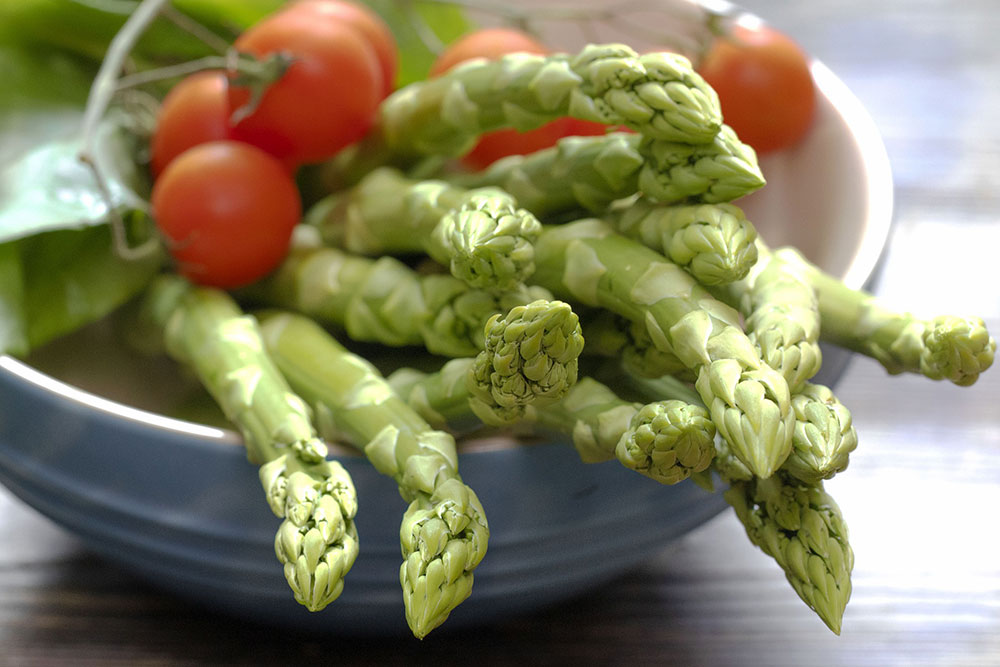
Asparagus– Giving asparagus a quick steam or bake will increase its cancer fighting properties. That said, we are most likely to eat it raw just chopped over salad. Not because we don’t like it cooked. Just because it often gets eaten before I cook it.

Tomatoes–The anti-inflammatory antioxidant lycopene is boosted when tomatoes are cooked. We eat tomato sauce (cooked) and raw tomatoes because we like them. As far as I’m concerned, there is no wrong way to eat a tomato (except some store-bought ones. They are often more cardboard than tomatoes)

Mushrooms– These fungi are better eaten cooked for two reasons. One – the heat enhances the antioxidants. Two – some mushrooms contain agaritine, a potential carcinogen that is cooked off. We buy mushrooms in big containers from the nearby warehouse store. I chop and cook the whole batch in a large frying pan with a lid. Just mushrooms and a bit of garlic. Store them in an airtight container and put them on salads, potatoes, pasta – pretty much anything. Bonus – mushrooms are on the Clean Fifteen list so there is no need to pay for organic.

Carrots– Cooking carrots increases their antioxidant power three-fold. Make sure you leave the skin on to get all the benefits. We eat carrots both cooked and raw. I run four or five of them through the food processor and store them in an airtight container in the fridge. It makes it super easy to grab them and throw them on whatever we are eating.

A quick word about cooking – Don’t fry anything, ever (I think that goes without saying but I said it anyway). It you boil veggies some of the nutrients will end up in the water (great for watering houseplants once it’s cooled). Steaming is a great option. And my go-to, put everything in a casserole dish with some spices and cook it all at once in the oven.

Dr Robyn is a former competitive volleyball player turned psychologist with continuing education in nutrition. Russ is a former competitive bodybuilder and trainer on the Mr. Olympia Tour. They are the co-founders of Whole Food Muscle and the authors of How to Feed a Human The Whole Food Muscle Way. To work with them one on one to improve your health and fitness or to have them speak at your event or organization email them at Health@RnRJourney.com.
The Low Down On Plant Milks

The Low Down On Plant Milks

We get asked how to replace cow’s milk pretty regularly. There was a time when I (Dr Robyn) drank milk by the large glass, sometimes with Nesquik added to it. But when we decided to give up using cow’s milk, we were really only using it to make our oatmeal and in “smoothies” (They were basically dairy with some fruit). We stopped making smoothies and for our oatmeal we switched to almond milk for a couple of weeks and then just started making it with water. Now we only use plant milk for a few recipes. And even those I have made with water without a problem.

But, if you are wanting to know what is the “best” plant milk, I came across a long article from the Food Revolution talking about the environmental and health risks of cow’s milk and why switching to plant milk is a good idea (link at the bottom). This is the Notes and Quotes summary of what you need to know to choose the best plant milk for you:

  1. Always read ingredients. You’re going to want to avoid Carrageenan (often in almond milk), guar gum (can be anywhere) and most likely, sugar. Of course, if you make your own plant milk you can avoid all the preservatives and extra stuff they add to make it shelf stable.
  2. Look of organic or GMO free to avoid the extra toxin load. This is particularly true for soy milk.
  3. You can make a version of buttermilk out of any plant milk by adding lemon juice.
  4. Adding cow’s milk or soy milk to your tea block the benefits of drinking the tea (other milks not tested)

Soy Milk

  • Along with pea milk (which sounds awful), soy milks have the most protein of all plant milks
  • Good for baking, cooking and drinking
  • Always get organic or non-GMO

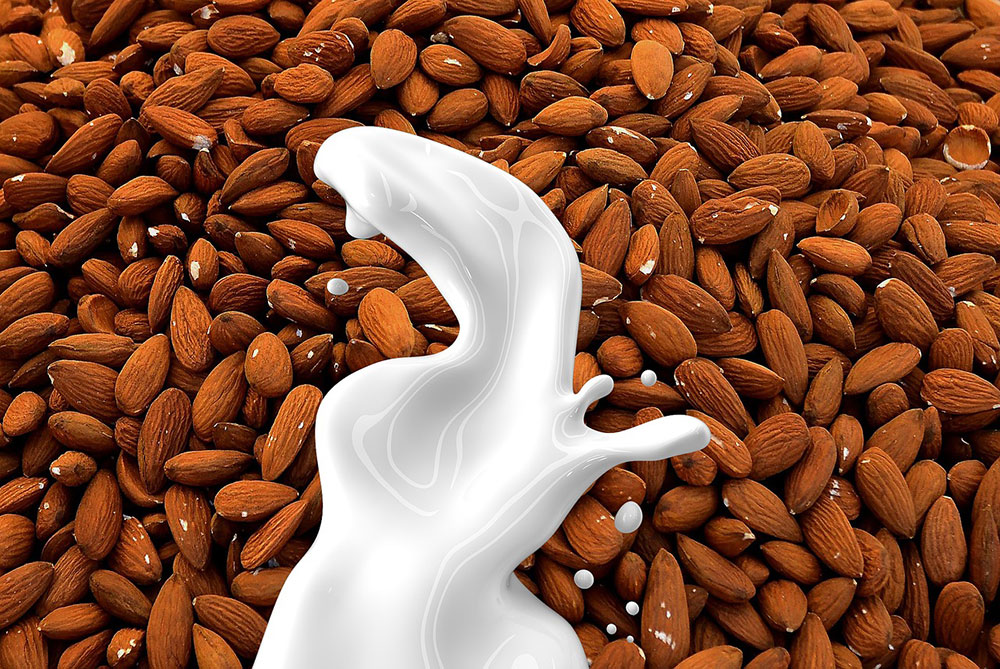
Almond Milk

  • Less than a gram of protein per cup (this was news to me)
  • Has 50% more calcium than cow’s milk
  • Rich source of vitamin E
  • Commercial brands can be watery – it’s better if you make your own
  • Works well for baking

Cashew Milk

  • Unsaturated fat (good fat)
  • Has lutein and zeaxanthin (good for your eyes)
  • Is a good base for creamy soups and sauces

Coconut Milk (Not the cream used in Asian dishes)

  • Saturated fat
  • Very little protein
  • Will add a coconut flavor to things

Hemp Milk

  • Naturally contains calcium
  • Good option if you have a nut allergy
  • Often has thickeners and flavorings
  • Not good for coffee

Quinoa Milk

  • Naturally gluten and nut-free
  • Limited nutritional value (most of the quinoa nutrients are lost in processing)
  • Has a distinct flavor some may find off-putting

Oat Milk

  • Hard to find with low or no sugar
  • Often has gums and oils added
  • Froths well for lattes and pureed soups
  • The greyish color can be disconcerting

Rice Milk

  • Non allergenic
  • High glycemic index
  • May contain arsenic
  • Often very thin and watery with little flavor

Pea Milk

  • High in protein (like soy)
  • Has a bit of an aftertaste
  • 50% more calcium than cow’s milk

Flax Milk

  • Not actually a thing
  • Is made with flax oil and added flavors and thickeners
  • Some packaging claims high protein – it has pea protein added to it

If you’re ready to bridge the gab between wanting to eat healthier and actually doing it, email Health@RnRJourney.com or send a text to 302-307-3091 to start the conversation about how we can help

Read the full article here:
https://foodrevolution.org/blog/milk-substitutes/

Dr Robyn is a former competitive volleyball player turned psychologist with continuing education in nutrition. Russ is a former competitive bodybuilder and trainer on the Mr. Olympia Tour. They are the co-founders of Whole Food Muscle and the authors of How to Feed a Human The Whole Food Muscle Way. To work with them one on one to improve your health and fitness or to have them speak at your event or organization email them at Health@RnRJourney.com.

How Stress Stops Weight Loss And Causes Weight Gain

How Stress Stops Weight Loss And Causes Weight Gain

Most of us are over-scheduled, burnt out, have responsibility to make things happen but not the authority to actually do them and exhausted. Cortisol, a stress hormone, courses through our bodies almost constantly.

Acute, short-term stress can steal your appetite, making you feel nauseous, edgy and not at all interested in food. Chronic, ongoing stress will make you hungry.

The human body is programmed to believe that stress hormones = running away from a lion. That means LOTS of calories burned that need to be replaced – quickly. Sitting behind your desk on a conference call with an angry client or stuck in traffic doesn’t burn any extra calories. But the stress hormones in your system are the same.

What Stress Does to Your Body

When your body gets stressed your adrenal glands pump out cortisol and adrenaline. Immediately glucose (blood sugar) spikes, insulin is released and your blood pressure goes up. At the same time your immune system is suppressed and digestion stops as all available blood is rerouted to the muscles.

All of that makes sense if you were running for your life. Your muscle cells would need glucose to burn immediately. Peak blood flow and insulin would get it where it needed to be and remove the waste products just as quickly. And who cares about fighting a virus or digesting food if you’re about to be lunch!

When there is no intense physical activity when under stress the hormones and glucose stay in your blood rather than being burned off. Your body releases more insulin to get your blood sugar back to optimal levels, and since your muscles didn’t use it, it’s stored as fat. The extra insulin over-shoots the amount of glucose in the blood and your blood sugar crashes. 

Additionally, once the adrenaline of a stressful situation starts to wear off, your body is programmed to replace the energy you used. Except you didn’t actually use any energy.

All of that adds up to craving fast, easy calories. Salt, sugar, fat – usually in a highly processed form (like ice cream or pizza). Eating that type of food releases dopamine and serotonin. It feels good, calming and brings your emotionally frenzied brain back online.

Great. Except you just took in a WHOLE lot of calories you didn’t actually burn. No worries. They can be stored as fat. 

Repeat multiple times a day for years and you can see how you ended up more than a little soft around the middle.

What I just described is a physical and psychological one-two punch causing your body to crave and be addicted to high fat, high calorie foods. But knowing the problem is only part of the solution. The other part is changing the things you can control. Reducing the stress in your life goes without saying. And there are a few other things you can do as well.

Set Your Body Up to Succeed Under Stress

Consistently eat foods high in nutrition– When your body regularly has the nutrients it needs it’s going to be better prepared to handle outside stressors. Reduce, better yet eliminate, animal products: meat, dairy, eggs. They are loaded with fat and hard to process excess protein. Eliminate low nutrient high calorie foods, basically anything processed. If it comes in a shelf-stable package with an unreadable list of ingredients, don’t eat it. Increase red, yellow, green and orange veggies. Increase whole-food starches like sweet potatoes and grains. Increase fruit.

Setting your body up with the nutrients it needs before you’re being chased by a lion will make the stressful event less damaging to your body and make you less likely to uncontrollably make unhealthy food choices.

Get enough sleep– Sleep is when your body gets to do repairs and settle things down. If you’re running on too little sleep, the stress from one day bleeds into the next and the next and the next. Building up over time to a deadly level. “Enough” sleep is eight hours a night. Don’t kid yourself by thinking you can function on less. You can and as a society we have  It’s not optimal and it’s not healthy. You make time for the things that are important and sleep is important.

>Exercise– That’s not news. Twenty minutes a day with an elevated heart rate caused by physical activity.

Address Your Psychological Addiction– This is probably the most difficult suggestion I’m going to make. It’s also the place where you can make the biggest change. Recognizing, understanding and changing your emotional, mental and psychological relationship with food is really hard to do by yourself. That's where working with someone like me for a few months can be really helpful.

If you are ready to address the way stress is negatively affecting your health, let’s set up a free get-to-know-you chat. Send me an email and let’s get you on track to taking control of your stress eating. Health@RnRJourney.com

Dr Robyn is a former competitive volleyball player turned psychologist with continuing education in nutrition. Russ is a former competitive bodybuilder and trainer on the Mr. Olympia Tour. They are the co-founders of Whole Food Muscle and the authors of How to Feed a Human The Whole Food Muscle Way. To work with them one on one to improve your health and fitness or to have them speak at your event or organization email them at Health@RnRJourney.com.